
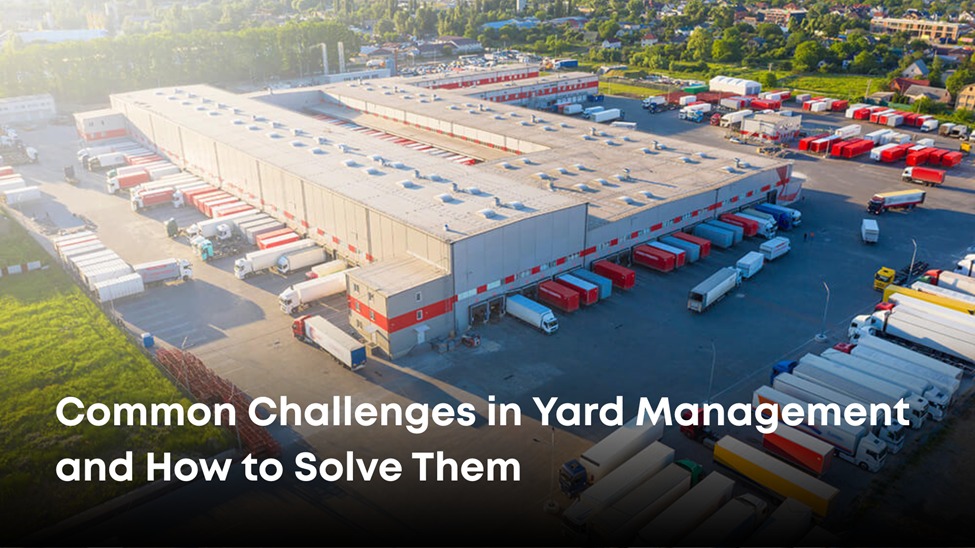
Yard management sits at the heart of efficient logistics operations. However, many businesses still struggle with visibility gaps, manual processes, and coordination bottlenecks that waste valuable time and money. Whether you operate a warehouse, manufacturing facility, or distribution center, managing trucks, trailers, and assets with precision is essential for a smooth supply chain.
This post explores the most pressing challenges in yard management and practical solutions to overcome them using technology, automation and data-driven strategy.
Lack of Real-Time Visibility
One of the biggest yard management challenges is the absence of real-time visibility. Without live data on trailer locations, gate activities or dock availability, yard operations can easily descend into chaos. Workers spend unnecessary time searching for assets, while delayed decision-making creates bottlenecks across the supply chain.
Solution:
Implement an advanced Yard Management System (YMS) integrated with Internet of Things (IoT) sensors and RFID tags. These provide instant updates on the location and status of trailers, containers and chassis, allowing managers to make informed, timely decisions. Real-time digital dashboards ensure full transparency from gate to dock.
Inefficient Gate Scheduling
The yard gate serves as the control tower for all vehicle movements. However, poor scheduling, manual entry and paper-based logs often lead to gate congestion and long waiting times. Idle trucks not only delay delivery cycles but also increase operational costs.
Solution:
Automating gate management through digital check-in systems and appointment scheduling software eliminates manual bottlenecks. Drivers can pre-register their loads and get assigned time slots, ensuring smoother vehicle flow. Integrating gate systems with your YMS gives you a unified view of inbound and outbound traffic.
Manual and Paper-Based Processes
Relying on spreadsheets or physical paperwork for yard activities severely limits efficiency. Manual data entry not only introduces errors but also slows down critical decisions during busy shifts.
Solution:
Upgrade to a paperless, cloud-based YMS that centralizes all yard data. With automation, workflows such as trailer check-in, yard spotting and dock assignment become seamless. Real-time reporting reduces administrative overhead and improves data accuracy, empowering faster communication among teams.
Poor Communication Between Teams
Yard jockeys, warehouse clerks and gate operators must stay in sync to prevent operational delays. many facilities rely on radio communication or informal methods to coordinate daily tasks, which can lead to miscommunication and lost productivity.
Solution:
Enable digital collaboration tools that integrate with your yard management platform. Mobile apps, digital task assignments and push notifications ensure instant communication between teams. Everyone can access the same up-to-date information, eliminating confusion and improving cross-department coordination.
Space Utilization and Trailer Management
An overcrowded or disorganized yard leads to wasted space and costly inefficiencies. When trailers are parked randomly or remain idle for extended periods, valuable real estate is wasted and turnaround times increase.
Solution:
Leverage smart yard mapping and automated slot allocation. With GPS and AI-enabled software, you can dynamically assign parking spaces based on size, urgency and availability. Regular audits using digital reports also help identify underused spaces and improve yard layout.
Inconsistent Workload Distribution
Another persistent issue is uneven staffing and task allocation. Some yard jockeys may be overloaded while others have idle time, creating inefficiencies that slow down the entire operation.
Solution:
Advanced YMS platforms come with intelligent scheduling features that assign tasks based on trailer location, driver skill and real-time workload. Automated scheduling ensures fair task distribution and boosts employee productivity while reducing burnout.
Lack of Performance Tracking
Without measurable data, it’s impossible to optimize yard performance. When facilities fail to monitor metrics such as gate-in and gate-out times, trailer dwell times or resource utilization, inefficiencies go unnoticed.
Solution:
Set up KPIs using YMS analytics dashboards. Tracking metrics like turnaround time, detention costs and space utilization helps identify bottlenecks early. Data-driven insights empower managers to continuously refine processes for higher throughput and lower costs.
Difficulty Coordinating with Carriers and Vendors
Yard management doesn’t stop at internal operations; it requires seamless coordination with external carriers and vendors. Miscommunication or unclear appointment scheduling can lead to missed deliveries and scheduling conflicts.
Solution:
Use carrier portals within your YMS that enable real-time communication with partners. Automated alerts, digital document sharing and appointment management tools streamline collaboration. Better coordination reduces unexpected delays and minimizes demurrage penalties.
Technology Fragmentation
In many businesses, yard management operates in isolation from other key systems like Warehouse Management Systems (WMS) and Transportation Management Systems (TMS). This siloed setup prevents end-to-end visibility and limits process efficiency.
Solution:
Adopt an integrated approach where YMS, WMS, and TMS communicate seamlessly. Synchronizing these systems ensures every stage from inbound shipment scheduling to outbound order dispatch is connected. Integration fosters better forecasting, transparency, and supply chain control.
Key Takeaway
Modern yard management goes beyond parking logistics; it’s about optimizing space, labor, time, and visibility across every yard operation. By embracing automation, analytics, and system integration, businesses can transform chaotic, manual yards into streamlined digital ecosystems.
From real-time visibility to optimized scheduling, each improvement step compounds efficiency gains and reduces costs. In an industry where margins are tight and time is money, smart yard management isn’t just an operational necessity; it’s a strategic advantage.